
 EN
EN  RU
RU 

World of Tanks light tanks: vision, scouting, and how to stay alive
Light tanks (LT) are where most players first learn the minimap. You trade raw firepower and armor for view range, camouflage, and mobility — the toolkit that decides whether your team shoots first or walks into a crossfire blind.
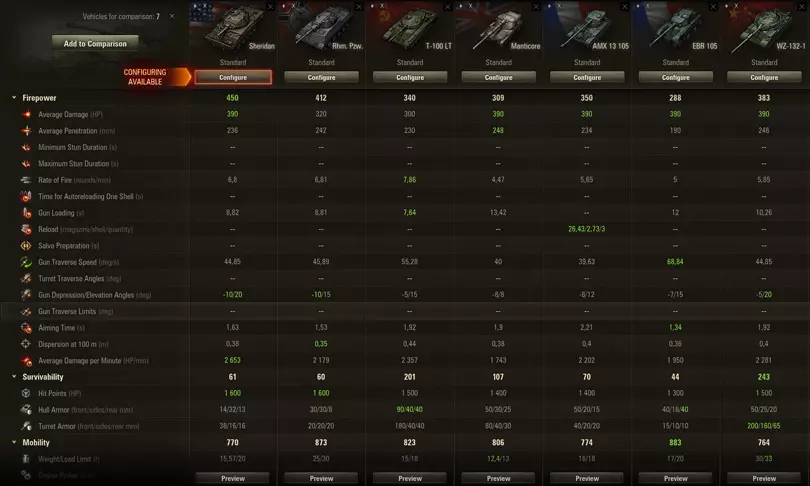
As you climb the tech trees, many light lines merge into mediums, so the Tier X roster is a short list of dedicated scouts plus wheeled outliers. At Tier X you will usually meet seven researchable lights across nations:
- XXM551 Sheridan
- XRheinmetall Panzerwagen
- XT-100 LT
- XManticore
- XAMX 13 105
- XPanhard EBR 105
- XWZ-132-1


National flavors still read differently on the minimap — one tank may favor passive bushes, another wants ridgelines and speed.
Good lighting also speeds mission progress: Personal Missions 1 and Personal Missions 2 often ask for spotting and assistance. Clan-focused players pair those habits with Maneuvers schedules where vision wins map control.
On this page
- What makes a light tank different
- Your job in the team
- Active scouting
- Passive scouting
- Crew skills
- Equipment picks
- Fighting with lights
- Brief summary
What makes a light tank different
Compared with mediums, heavies, and tank destroyers, lights bring the weakest sustained damage and the softest profiles. Low alpha and modest penetration are normal — you are not here to out-trade a heavy in a lane fair fight.
What you do get is a playground of gun personalities while you climb:
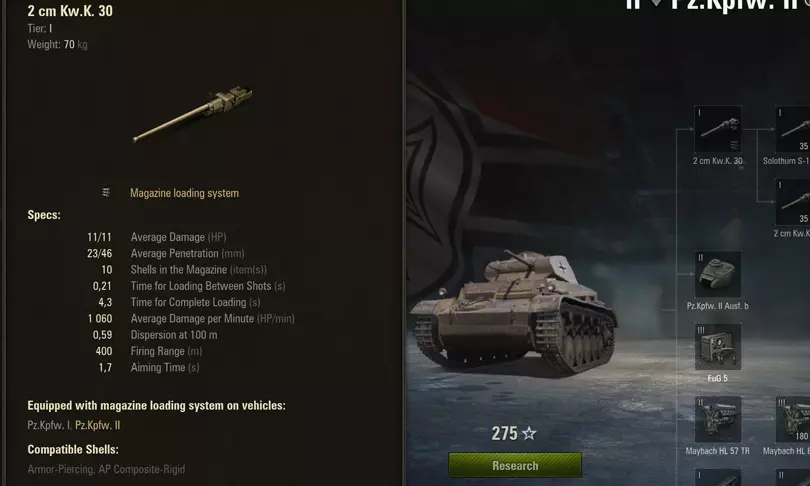
- Machine-gun magazines at low tier: The German IIIPz.Kpfw. II Ausf. G line can feel like a burst SMG with tiny gaps between shells. The catch is awful accuracy and small caliber past point-blank — past ~400 m you are guessing, not aiming. That flavor mostly lives until Tier V.
- French drum lights: From VIAMX 12 t onward, France trades burst length for better gun handling and chunkier clips than the early German gimmick.
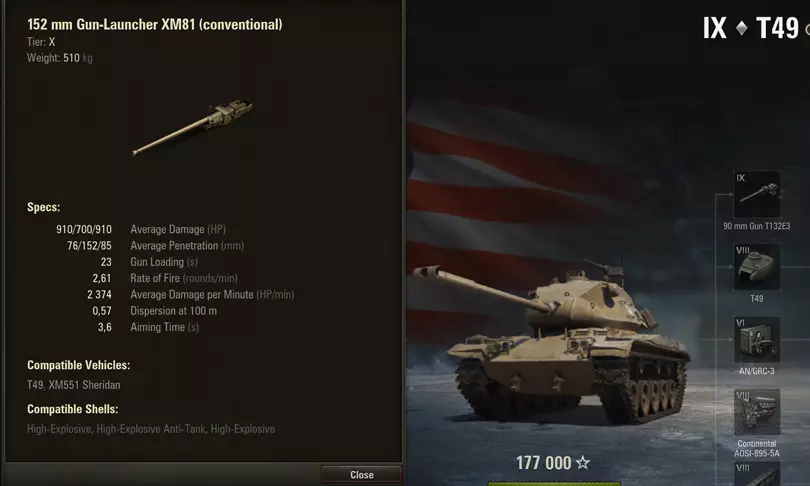
- Derp memes: The US line’s IXT49 moment is less about DPM and more about ruining someone’s day with a 152 mm hello — still a light’s job first, a joke second.


Your job in the team
Lights are the team’s eyes and ears. View range lets you light targets your heavies cannot even render. Mobility gets you to bushes, dips, and early crossings before the red team owns them. Camouflage keeps you alive while allies farm your spotting damage.
Scouting is not “drive forward until you die.” It is choosing when to light, from where, and how long you can stay unspotted while doing it.
Active scouting
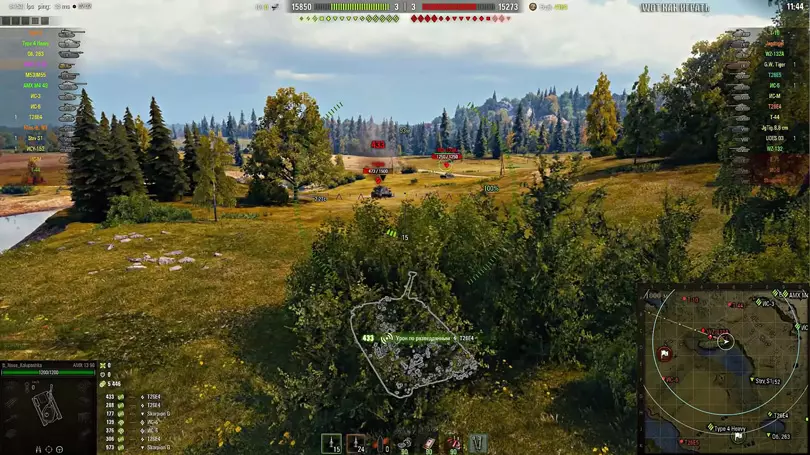
Active scouting means motion: peeking lanes, baiting shots, resetting vision, and forcing the enemy to react. You read terrain constantly — hard cover, dead ground, escape routes — because the moment you stall in the open, you are priority target number one.
- Never assume stealth at full speed: Moving kills camo; plan bursts of movement between bushes or ridges.
- Know your exit: If you light three guns, the fourth already has you zeroed — have a pre-planned drop into cover.
- Share the minimap: Pings and concise calls beat silent martyrdom.
Passive scouting
Passive scouting is patience: a bush, a double bush, sometimes a pixel gap that still breaks line of sight. You let enemies drive into your view range while you barely move. It wins early damage races when the enemy team leaks hitpoints before they know where you sit.
- Bushes stack, mistakes multiply: Pull forward only until your vision tooltips look right, then stop.
- Respect render rules: If you cannot see them, your team might not either — learn the difference between spotted and rendered.
- Rotate before they blindfire: Once arty tastes your bush, change the angle or fall back to a new pocket.
Crew skills
Crews on lights live or die on vision and stealth first, gun comfort second.
After the core package, invest in repairs or firefighting only if you routinely brawl — most lights spend more time unspotted than tracked.
Equipment picks
Build around the tank’s actual stats, not copy-paste loadouts from three metas ago.
- Vision stack: Coated Optics, low-noise Exhaust, or Commander’s Vision System when the map pool rewards first spot.
- Survivability: Improved Hardening or modified modules that help you survive one extra HE splash or keep the engine turning.
- Gun handling: Stabilization or aiming aids on autoloaders and derps where you must snapshot and vanish.
If the grind is the bottleneck, the World of Tanks catalog lists credit, XP, and mission help — use it for the parts you hate, not as a substitute for minimap literacy.
Fighting with lights
- Pick isolated targets: Finish low-HP enemies, punish lone arties, reset caps — do not duel superheavies for “honor.”
- Abuse vision after the brawl: Mid- and late-game, living lights dictate who shoots whom.
- Learn when to die: Sometimes trading your tank for a won flank is correct; most of the time it is not — default to staying alive for the next spotting window.
Brief summary
Light tanks look fragile because they are — on paper. In practice they set tempo: early information, mid-game picks, and late-game map denial. Master passive and active scouting, stack crew and equipment toward vision, and treat your gun as a tool for opportunistic damage, not frontal trades.
Want to skip stock modules or speed up a light line without burning weekends? Pick a scoped boost with a clear brief.
Browse World of Tanks services →

